

Can living brain cells become the next computer chip?
Scientists are connecting living neurons to silicon chips to build machines that can learn, adapt, and maybe rethink the future of computing.

In today’s episode of The Epicenter, we look at why scientists are teaching living brain cells to play video games, how neurons could become a new kind of computing substrate, and why the future of computers may be part silicon, part biology. But before we dive in, if you’re someone who loves keeping tabs on the world of startups and technology, hit subscribe if you haven’t already. And if you’re already a subscriber, thank you! Maybe forward this to someone who’d enjoy this story but hasn’t discovered it yet. Now onto today’s story….
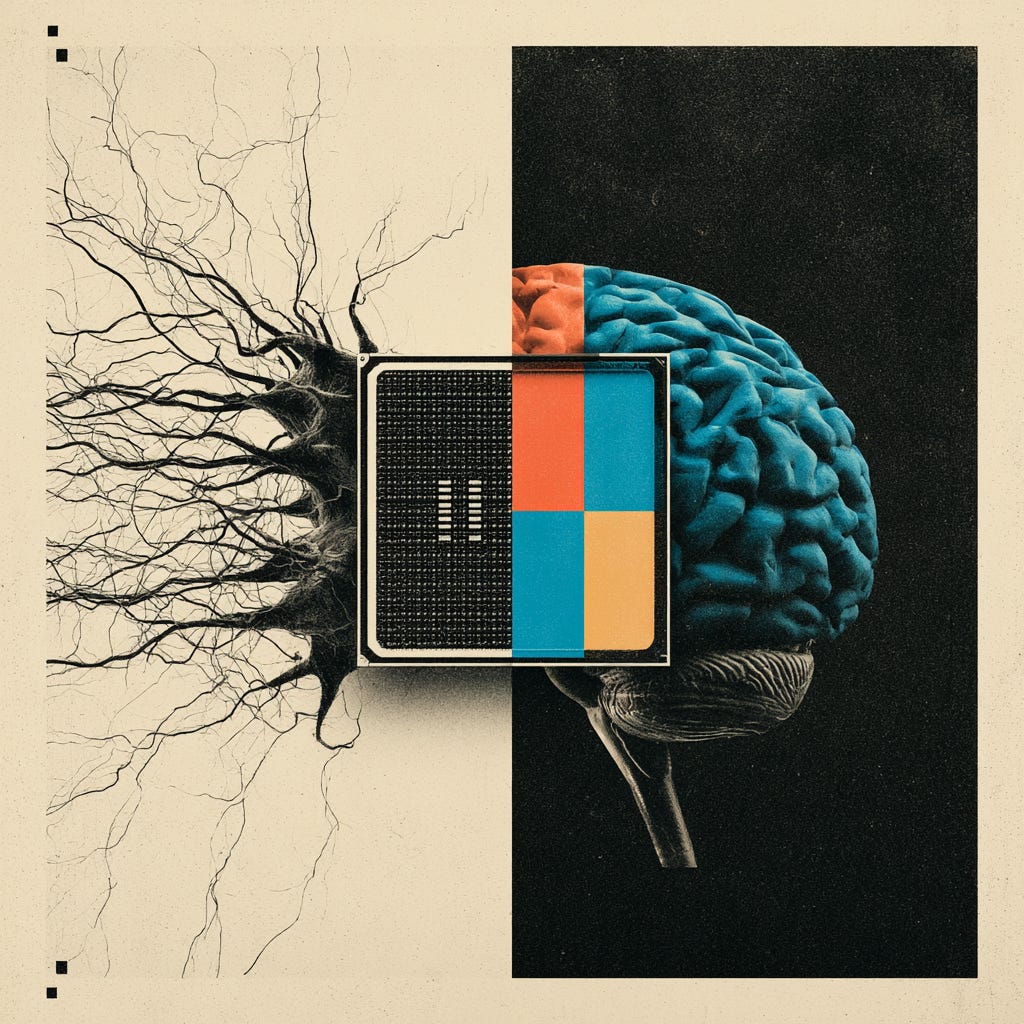
For decades, computing has meant pushing more transistors onto silicon chips. But as that model runs into physical and economic limits, a strange new idea is gaining ground: what if the next leap in computing doesn’t come from better chips, but from living neurons grown in a lab?
In 2021, a dish of human brain cells learned to play Pong. These were actual living neurons, grown in a lab, were connected to electrodes and trained to move a paddle on a screen.
I get that this sounds like the beginning of a very strange sci-fi movie but this wasn’t fiction. It was an experiment by Cortical Labs. And depending on whom you ask, it may have offered a small glimpse into the future of computing.
To understand why this matters, you first have to look at the machine sitting under almost every modern technology we use: the silicon chip. For decades, the playbook was simple. Make transistors smaller. Pack more of them onto a chip. Get more computing power for roughly the same cost. That’s how we got personal computers, smartphones, cloud computing, and now AI. The industry called this Moore’s Law. And for a long time, it worked beautifully.
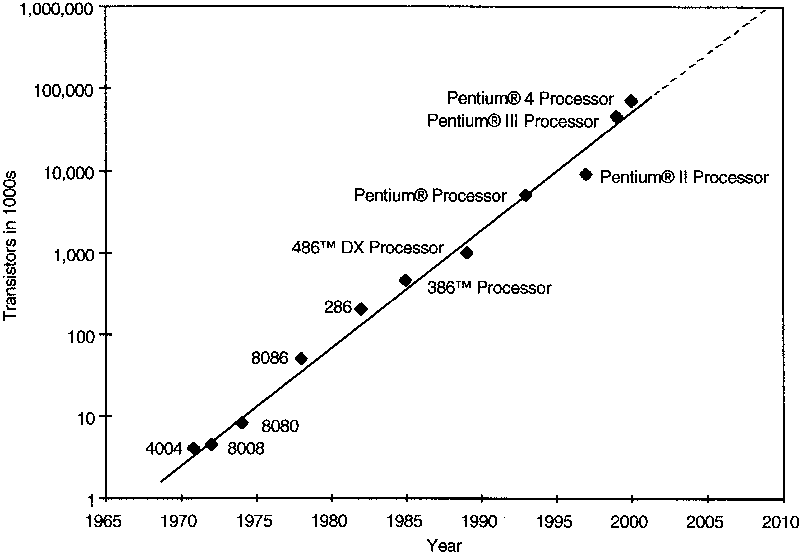
Just look at today’s AI chips. Nvidia’s H100 GPU packs about 80 billion transistors. Its newer Blackwell GPUs pack 208 billion transistors into a single GPU package. These chips are made through a process called lithography, where patterns are etched onto silicon wafers with extreme precision, almost like printing microscopic circuits onto a chip. But there’s an obvious problem here.
You can’t keep shrinking forever. At some point, the components become so tiny that heat, power consumption, manufacturing complexity, and weird quantum effects begin to get in the way. So even after spending billions on better fabs and better architectures, we’re still trying to make machines behave intelligently using hardware that was never designed to think like a brain. Silicon is excellent at arithmetic. But learning, adaptation, intuition - these are things biology has been doing quietly for hundreds of millions of years.
And this is where wetware computing enters the picture. The idea is not to throw away silicon chips and replace your laptop with a bowl of brain cells. The idea is to combine the two. Silicon chips are brilliant at storing data, moving signals, and performing precise calculations. Living neurons are brilliant at learning from messy inputs, adapting to feedback, and reorganizing themselves when the environment changes. Put them together, and you get something strange: a bio-digital computer where silicon handles the plumbing and neurons do some of the learning.
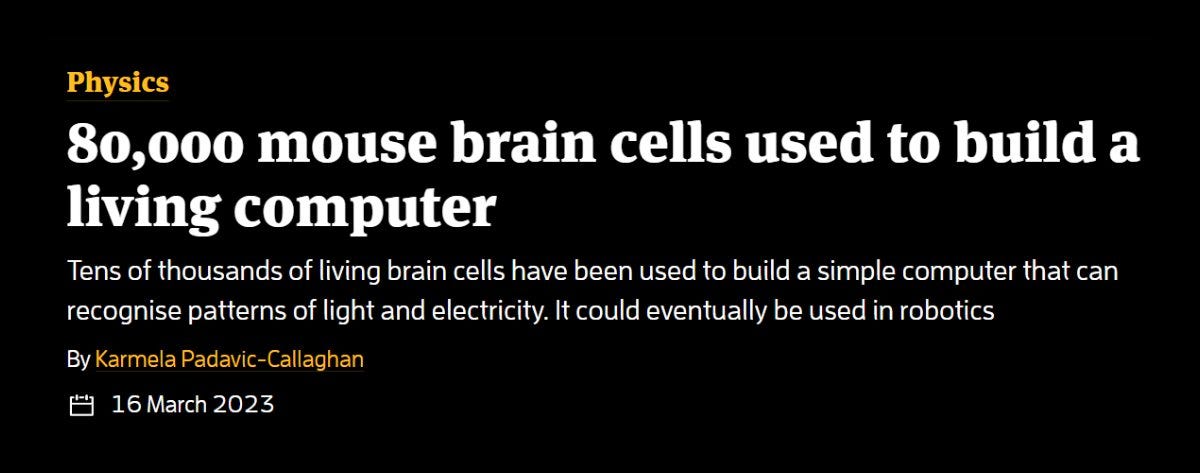
That may sound abstract, so think of it this way. A normal computer needs to be programmed line by line. Even modern AI systems, for all their magic, still need massive datasets, huge clusters of GPUs, and ridiculous amounts of electricity to learn patterns. A living neural network behaves differently. It doesn’t need every rule written in advance. Give it signals, feedback, and time, and the network starts changing its own internal connections. In biology, we call this neuroplasticity. In computing, it looks a lot like a machine teaching itself how to respond.
And scientists have been playing with this idea for longer than you’d think. Back in 2004, researchers connected around 25,000 cultured rat neurons to a flight simulator and used them as a kind of living autopilot. The neurons received signals from the simulated aircraft, responded through electrical activity, and slowly learned to stabilize the plane. Which means, in a very technical sense, rat brain cells were flying simulated aircraft before most of us ever touched a flight simulator.
The Pong experiment pushed this idea into even stranger territory. Cortical Labs grew human neurons on a chip, connected them to electrodes, and translated the game into electrical signals. The neurons weren’t “seeing” a screen the way you and I do. They were receiving patterns of stimulation. When the paddle hit the ball, they got predictable feedback. When it missed, the feedback became chaotic. Over time, the network started adjusting its activity to keep the game more predictable. In plain English, the neurons learned.
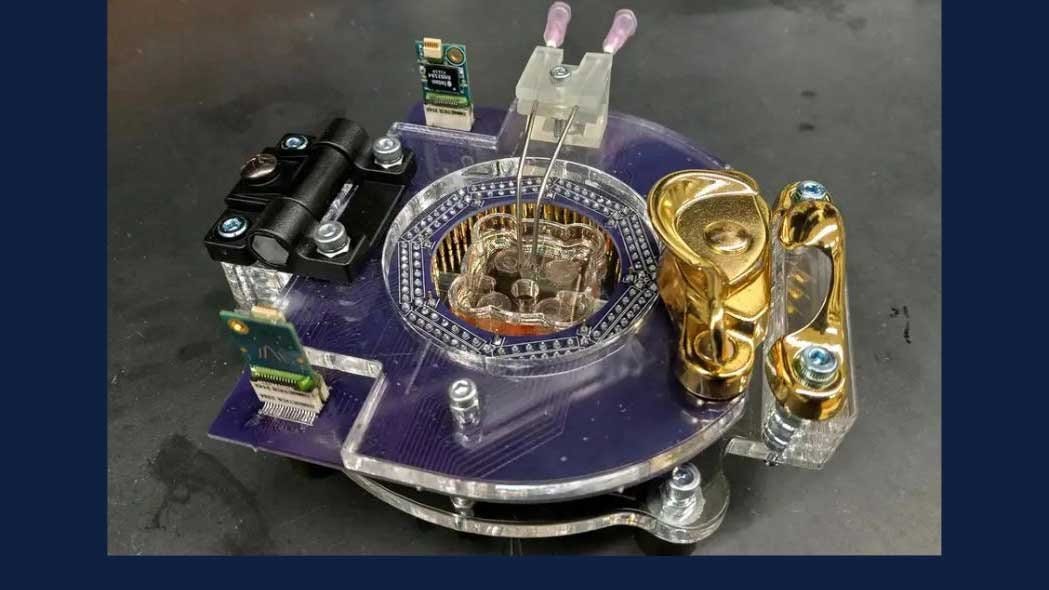
And this is why people are excited. A dish of neurons is not going to replace Nvidia tomorrow. But it hints at a very different kind of machine. One that doesn’t simply execute instructions, but adapts. One that doesn’t need every edge case coded into it, but can learn from feedback. One that might someday solve certain problems with far less energy than today’s brute-force AI systems. After all, the human brain runs on about 20 watts of power. That’s less than many light bulbs. Meanwhile, modern AI models need warehouses full of GPUs, cooling systems, and electricity to do a narrow slice of what biology does naturally.
This is also why startups have begun treating neurons like a new computing substrate. Koniku, for instance, has been exploring chips that combine living neurons with silicon to build biological sensors, especially for smell. FinalSpark has built a remote research platform where scientists can run experiments on clusters of human neurons. And Cortical Labs is trying to build programmable biological intelligence by training neuron-based chips through feedback loops. The bet is simple but radical: maybe the next frontier of computing isn’t just smaller transistors. Maybe it’s living systems that can learn.
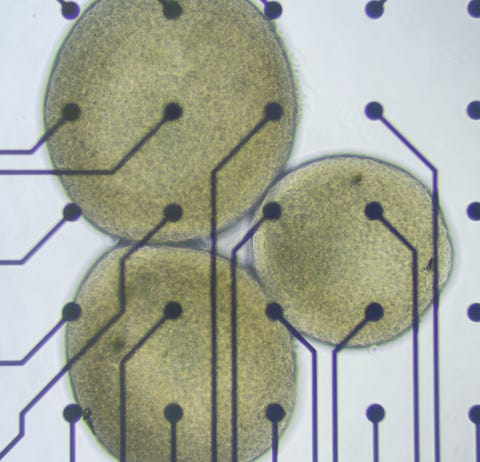
But there’s a big gap between “brain cells can play Pong” and “brain cells can power the next data center.” Living neurons are not like silicon. You can’t manufacture them with perfect consistency. You can’t simply turn them off, reboot them, and expect the exact same output every time. They need nutrients, oxygen, temperature control, and a carefully managed environment to stay alive. A chip can sit inside a laptop for years. A living neural network has to be cared for almost like an organism.

Then there’s the harder problem: control. Traditional computers are predictable because they follow instructions. Biological systems are powerful precisely because they don’t. They self-organize. They adapt. They change. That’s what makes them interesting, but it also makes them messy. How do you train a cluster of neurons to perform a specific task? How do you know what it has learned? How do you scale it from a tiny dish to something commercially useful? And how do you make sure two biological chips behave the same way when no two living systems are exactly alike?
And then there’s the uncomfortable question. If these systems become larger, more complex, and more brain-like, at what point do they stop being “hardware” and start becoming something we owe moral consideration to? A few thousand neurons in a dish probably aren’t conscious. But what about a few million? What about a few billion? What if the network can learn, remember, respond to pain-like signals, or display behavior that looks disturbingly close to preference?
This is where wetware computing gets philosophically messy. With silicon, the line is easy. A chip doesn’t suffer. A GPU doesn’t care whether it is running ChatGPT, rendering a video game, or mining Bitcoin. But living neurons are different. They come from biological systems that, in the right arrangement, can produce sensation, memory, emotion, and consciousness. So the closer we get to building computers out of brain-like tissue, the harder it becomes to pretend this is only an engineering problem.
So no, your next laptop probably won’t have a tiny brain inside it. And Nvidia isn’t going to be dethroned by a petri dish next quarter. Silicon chips will remain the backbone of computing for a long time because they are reliable, scalable, manufacturable, and predictable. Wetware systems are nowhere close to that level of maturity.
But the bigger shift is conceptual. For most of modern history, we have treated computers as machines that follow instructions. Wetware computing asks a stranger question: what if computers could grow, adapt, and reorganize themselves like living systems? If that works, even in narrow domains, the future of computing may not be purely digital. It may be hybrid — part silicon, part biology. And that means the next great computing breakthrough may not come from shrinking transistors further. It may come from learning how to speak the language of living neurons.
Until then.
If you liked this story on Biocomputing, feel free to share this with your friends, family or even strangers.