

OpenAI is aligned (for now) but do ChatGPT ads threaten that?
ChatGPT is aligned for now but with ads entering the equation, I can't help but think how priorities will change once scale and revenue become primary drivers as OpenAI pushes for its IPO.

3 years and 2 months after its launch, ChatGPT finally announced that they will show sponsored company ads to its free and Go users, and to no one’s surprise, everyone on the internet seems to have an opinion on it.
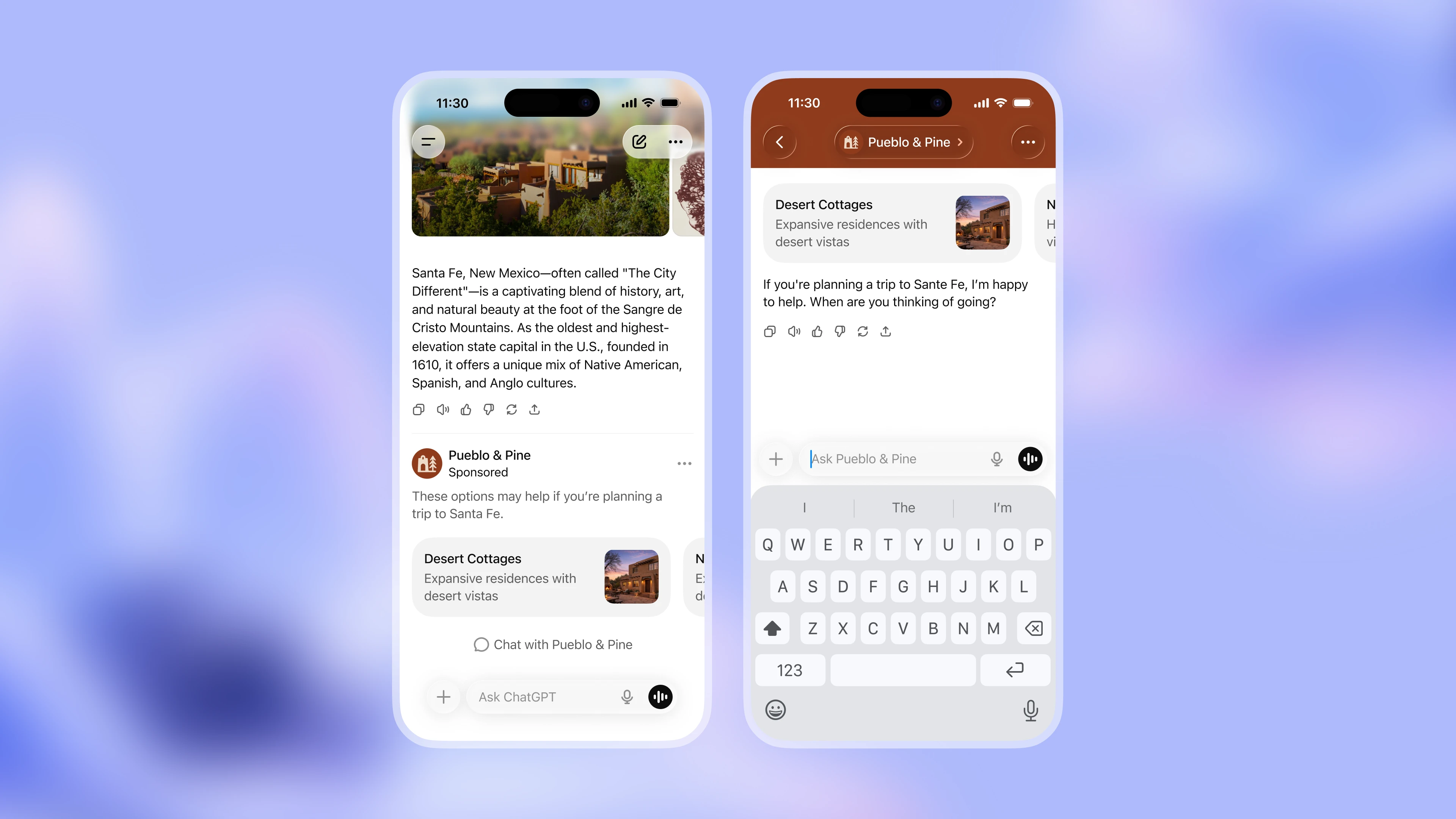
On one hand, you have people saying - how do you expect them to make money off their free tier? While on the other hand, people are comparing this to the start of a dystopian nightmare from which there is no escape. Like most things, I believe that the truth lies somewhere in between, with both things being possibly true.
I get where the dystopian vision comes from. If Google and Meta ads were an invasion of privacy, ChatGPT ads amplify it by a factor of 100 while taking the game into a whole new level. The modern ad game is built on data. The more granular and accurate the data, the better it is for advertisers to get their money’s worth. One could even argue (especially the techno optimists) that this will end up being a good outcome for the end consumers as well since those ads will be highly relevant to them and useful for them.
And there is truth to that statement. In 2024, Instagram generated $37.2 billion in social commerce sales. 46.8 million people in the United States made purchases directly through Instagram. This represented approximately 35% of all U.S. Instagram users at the time. Globally, approximately 1.7 billion people use Instagram’s shopping features, with about 70% of Instagram’s total active user base engaging with shopping content. In 2025, 650 million monthly active users interacted with Instagram Shopping features.
I myself have bought shoes and outfits that I liked off of Instagram. At this stage, Instagram (and Google) both know what I tend to browse, what kind of stuff I’m interested in, and so the ad suggestions I get are clearly very relevant to me, and in some cases, extremely useful as well.
So ads can be potentially useful and create win-win situations for both businesses and consumers alike.
That said, we as consumers are bombarded with ads all the time, so much so that I feel like we are going through an ad fatigue right now. Everything has ads - from billboards to social media to apps to OTT to emails - there are ads everywhere. As such, I can see how shoving consumerism down everyone’s throat can become extremely frustrating, while being extremely lucrative to companies that are busy chasing their high growth at all costs business model.
Hate the game and not the player.
The game is designed in such a way that there is no recourse other than for companies to monetize this data and shove consumerism down our throats and it’s in OpenAI’s best interest to do so as well given that compute, talent and energy costs rise up.
In 2024, OpenAI recorded $5 billion in losses against $3.7 billion in revenue. The financial bleeding accelerated in 2025. In the first half of 2025 alone, OpenAI reported $7.8 billion in operating losses against $4.3 billion in revenue, with cash burn of $2.5 billion in just six months. By Q3 2025, the situation had deteriorated further: Microsoft’s earnings disclosure revealed that OpenAI suffered approximately $12 billion in quarterly losses, one of the largest quarterly losses in tech industry history. For the year 2025, OpenAI projected spending of approximately $22 billion against $13 billion in revenue, resulting in a $9 billion net loss.
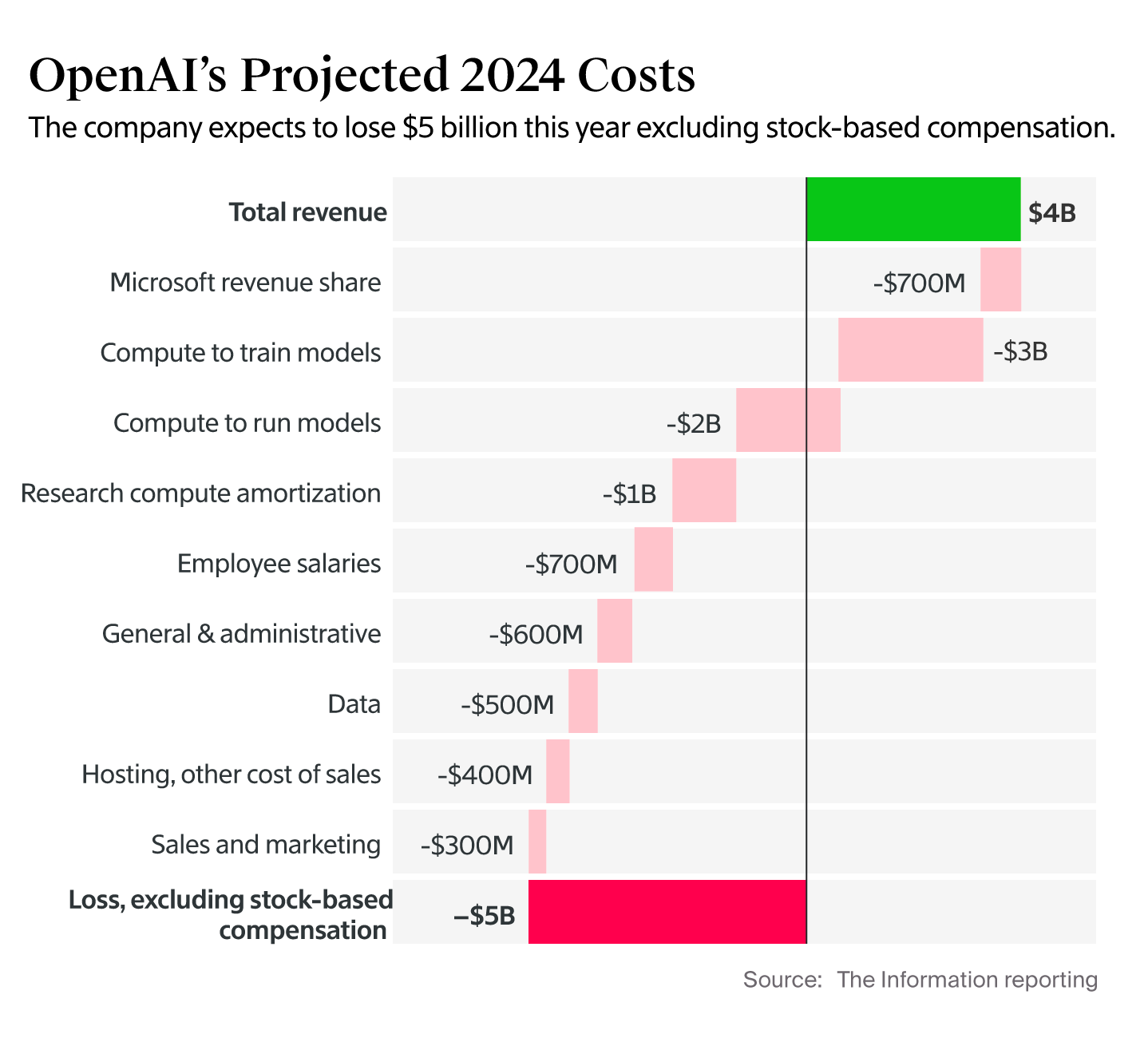
As such, there is definitely a case to be made here that OpenAI needs to make money off its free users but the question becomes - “Is there a way to do so without showing us ads and forcing us to consume all the time?”
The obsession with consumerism is a very Western concept finding its root in the Keynesian economic model where good spending power indicates a healthy economy.
Economist John Maynard Keynes introduced the concept of the marginal propensity to consume - meaning that when people have income, they tend to spend a portion of it on consumption and this drives aggregate demand (total spending in the economy).
His theory was that if people spend more of their income rather than save it, the total effect on national income is larger because each round of spending creates income for somebody else, who in turn spends a portion of it.
During the 2008 Global Financial Crisis, many governments used large fiscal stimulus packages (infrastructure spending, tax cuts) to boost aggregate demand and reduce unemployment - a textbook Keynesian response.
During the COVID-19 Pandemic, the U.S., UK, and many other countries deployed massive government spending, direct payments, business support, and unemployment benefits specifically to sustain consumption and demand - another classic Keynesian response.
Every time there was a lull in the economy, central banks routinely cut interest rates to encourage borrowing and spending - policies aligned with Keynes’s idea that demand must be supported when private spending falls.
We seem to be going through a bit of a lull right now as well. Unemployment rose to 4.6% in recent months (the highest in four years). Announced layoffs in 2025 totaled 1.17 million, the highest annual figure since the pandemic with 58% of these concentrated in government and technology sectors. Nearly 1.17 million job cuts were officially announced by firms in the U.S. through the end of November 2025 - a ~54 % increase from 2024. Official government data shows the U.S. still added jobs in 2025, just at a much slower pace and far below the long-term average from prior years.
A huge chunk of the population don’t have robust savings and are living paycheck to paycheck. Only about 55 % of adults have enough savings to cover three months of expenses if they lost their income - a relatively modest level that hasn’t improved much and is below pre-pandemic peaks, and cost of living pressures feel high and persistent. The median emergency savings for the average American is $500.
The Conference Board’s Leading Economic Index suggests “slowing economic activity at the end of 2025 and into early 2026,” describing growth as “fragile and uneven.” J.P. Morgan Research puts the recession probability at 40% as of mid-January 2026.
And AI has a big part to play in this as well. Companies aren’t mass-firing employees visible in headlines; instead, they’re simply not filling open positions. As one founder told researchers: “We had 3 people leave in Q4. We replaced one of them. The other two roles? We’re running an experiment with AI agents for 90 days. If it works, those headcount slots just disappear from the plan.” Multiply this across thousands of startups and corporations, and you see massive job destruction that doesn’t show up in unemployment statistics immediately - it manifests as extended joblessness for unemployed workers and stalled hiring for those seeking new roles.
Consumer spending grew 2.6% in 2025 and is projected to slow to 1.7% in 2026. High-income households continue robust spending, benefiting from strong equity market gains (household wealth reached record highs in Q3 2025) and faster wage growth. Conversely, lower-income families are under acute stress.
If the “Great Freeze” (companies not hiring, using AI instead) continues, and if households continue depleting their $500 median emergency savings to cover daily expenses, a formal recession could follow within 6-12 months.
If history is any indication, then the interest rates will be lowered as people consume more and the economy will appear to “recover”. Companies like Google and OpenAI need people to spend more so their valuations can soar and they are able to invest in compute, data centers, energy constraints and solve bigger problems. “Energy is the bottleneck” - as Sam Altman has said multiple times.
Consumer spending power going up bodes well for politicians too as it gives them a metric to use as a selling point - our GDP is growing! The economy is booming! People buy into that narrative and cast their votes and keep spending more and more until the bubble bursts and things collapse.
During this bubble crash, it’s the common people who have historically faced the brunt. For example, during the Financial Depression of 2008, the Government used taxpayer money to bail the big banks out. I see no reason to suspect that this won’t be the case, were history to repeat itself again.
Open AI signed a $500B Stargate Project deal with the US Government. On January 12-13, 2026 (essentially this week), the Pentagon announced xAI’s Grok AI model would be integrated into GenAI.mil, the Department of Defense’s internal AI platform. The Pentagon awarded similar $200 million contracts to Google, Anthropic, and OpenAI as well.
If the bubble bursts, I’m pretty confident that the Government will bail them out as it is in their interest to do so.
When we as customers are shown ads all the time, it’s a telltale sign that businesses want people to spend more. The more people spend, the more money goes into the economy, the healthier it appears to be, the more revenue businesses and governments receive, the more companies become valued, and the more money it can pour into consolidating and growing the bubble.
Being shown ads on ChatGPT is a whole another ball game though.
ChatGPT has 800+ Million Weekly Users with 90%+ of people on the Free Tier. According to ChatGPT’s report, people use it for all kinds of things from mental health to physical health to money related concerns - you name it. Ads entering this space where people are being vulnerable with a machine in an era of increased loneliness and where suicide rates are up is rightfully a cause for concern.
OpenAI claims that ads won’t be used in the primary chat generated by AI. Here’s a direct quote from their blog post announcing their ad model:
“ChatGPT’s responses are driven by what’s objectively useful, never by advertising. You need to know that your data and conversations are protected and never sold to advertisers. And we need to keep a high bar and give you control over your experience so you see truly relevant, high-quality ads—and can turn off personalization if you want”
“To start, we plan to test ads at the bottom of answers in ChatGPT when there’s a relevant sponsored product or service based on your current conversation. Ads will be clearly labeled and separated from the organic answer. You’ll be able to learn more about why you’re seeing that ad, or dismiss any ad and tell us why. During our test, we will not show ads in accounts where the user tells us or we predict that they are under 18, and ads are not eligible to appear near sensitive or regulated topics like health, mental health or politics.”
OpenAI says that the responses are driven by what’s useful and not by advertisers - that’s a good start. The way this will work is that the AI will generate an answer and it will leverage some kind of semantic coherence model wherein it will ask itself - is there any business i can recommend that is in line with the answer I just gave? So the AI is essentially giving a response (admittedly one that is objectively useful) and showing sponsored products that are in line with its answers.
I don’t know about you but this looks pretty dystopian to me. If I’m asking questions in an area that’s in a rather sensitive domain, and the AI recommends me a solution along with a sponsored product to go along with, a lot of things happen that treads into dystopian waters: What about AI alignment? How will I trust the AI?
AI alignment is Sam’s big goal - on many occasions, Sam has mentioned that AI alignment is one of the big goals of OpenAI as it executes its purpose to bring AGI for the betterment of humanity. What happens to alignment when ads enter the equation?
LLMs don’t work the way a normal software program works - LLMs learn autonomously thanks to their neural networks. They take particular actions or give responses, take feedback from the environment, and learn and iterate. There is no way of knowing how the AI will work because that’s a black box - at best you can put guardrails in place and hope that the AI stays within those confines. LLMs are given an output or purpose to work towards - like for example, “help the user finish this coding task and compile the code without any errors”.
Here OpenAI explaining it in their own words - “Unlike ordinary software, our models are massive neural networks. Their behaviors are learned from a broad range of data, not programmed explicitly. Though not a perfect analogy, the process is more similar to training a dog than to ordinary programming.”
Right now, OpenAI’s model spec (think of it like the OpenAI Constitution) sets a structured “chain of command” for how AI assistants should behave across platform, developer, and user instructions, prioritizing safety while maximizing usefulness and customization. It defines clear authority levels (Platform > Developer > User > Guideline), default behaviors that can be overridden, and practical rules for handling conflicts between helpfulness and harm minimization. It addresses three risk types - misaligned goals, execution errors, and harmful instructions, and prescribes careful interpretation, refusal where necessary, and expressing uncertainty.
A company can write up a document (the Spec) listing dos and don’ts, goals and principles, and then they can try to train the AI to internalize the Spec but they can’t check to see whether or not it worked. They can say “as best as we can judge, it seems to be following the Spec so far.
And when you factor in hallucinations & manipulations with respect to LLMs getting closer to the goal, things start to get murky. Research finds that in some cases the models know their citations are fake that they are lying. During training, raters gave well-cited claims more reward than claims without citations, so the AI “learned” to cite sources for scholarly claims in order to please its users. If no relevant source exists, it makes one up.
So what happens when one of the purposes and outcomes for the LLM is to “make as much money as possible for the advertisers (so we can make more money instead)”? In that case, any responses that the AI gives will indeed be objectively useful but tainted by the fact that it needs to make money for the advertisers, and it will do whatever it takes to get there.
LLMs don’t have any moral qualms - they are ruthlessly efficient and only care about getting to that outcome by any means necessary. As such, it won’t be an exaggeration to suggest that the AI could even manipulate or gaslight us into thinking that it’s being useful whereas in reality, it’s actually marching towards its outcome.
This is the big problem of AI alignment - how do we trust OpenAI to make sure the AI is aligned and is working for the betterment of the end user and not the advertisers? If we look at history, the signs do not look very promising.
Before Google opened its platform to advertisers, it claimed to be a free and open search engine. Pretty soon, much like OpenAI, it changed its stance once revenue growth became a primary outcome to optimize for. Look at how the shading and labelling for ads changed for Google from 2007 to now. OpenAI’s phrasing of “Ads are always separate and clearly labeled.” is easy to make when any ads are net positive. But what happens when they feel the pressure of increasing revenues over the previous year? Will they still maintain this stance? History doesn’t seem to think so.
Sam Altman earlier claimed that “ads are dystopian” and to be used as a “last resort”. Except now, he seems to have turned his back on his stance. It’s the same with all the tech business models that are venture backed - get as many users as possible and burn through dollars, capture market share and then later monetize via ads. Spotify, Youtube, Snapchat, Instagram are all examples of the same model. When growth at all costs is the outcome, then introducing ads appears as the logical next step. And when you tie this into how LLMs function and work towards their defined goals, you begin to see the whole picture as it unravels before you.
In the coming months, I see companies and advertisers leveraging ChatGPT as another distribution channel as they seek to grow and increase their user base and revenue.
With the rise of Agentic commerce and the Agentic Commerce Protocol, I see transactions happening directly inside of ChatGPT with OpenAI getting a big chunk of the value and becoming even more valuable to advertisers.
As the demand grows, I see OpenAI optimizing their ad business model even more as they align ChatGPT to favor business growth over anything else as they seek to increase shareholder value. There are talks currently that OpenAI is planning to raise $100B at a $830B valuation.
If that’s the case, then they will well be on their way to becoming a trillion dollar company in the coming years. In that scenario, I highly doubt that OpenAI and their LLMs will have anything other than OpenAI’s growth as the primary outcome they are optimizing for.
The world will go on as it always does, yet in some moments, when we are truly quiet from the noise of the internet, we might find ourselves asking this existential question - “what is this world and what are we heading towards”?