

Why can SpaceX launch rockets for less than everyone else?
How SpaceX brought the cost of a rocket launch from $4 billion to $67 million and what that unlocks for the space economy.

In today's episode of the Epicenter, we go through how SpaceX brought the cost of a rocket launch from $4 billion to $67 million and what that unlocks for the space economy. But before we dive in, if you’re someone who loves keeping tabs on the world of startups and technology, hit subscribe if you haven’t already. And if you’re already a subscriber, thank you! Maybe forward this to someone who’d enjoy this story but hasn’t discovered it yet. Now onto today’s story….

Imagine if every time you flew from New York to San Francisco, the airline threw away the aircraft after landing. Sounds ridiculous. Yet that’s pretty much how the rocket industry worked for decades.
Traditional rockets were designed in stages. As they climbed higher into the atmosphere, each stage burned through its fuel and detached. By the time the payload reached orbit, most of the rocket had already fallen back to Earth or burned up in the atmosphere. Which meant that after every launch, companies had to build another rocket from scratch.
Not exactly a recipe for low costs. A single launch could easily cost hundreds of millions of dollars. Yet nobody was particularly motivated to reduce those costs. That sounds strange until you look at the incentives.
For most of the Space Age, access to orbit was largely the domain of governments. The biggest customers were organizations like NASA, national space agencies, and the military. Competition was limited, launches were infrequent, and reliability mattered far more than cost.
Imagine you’re launching a military satellite worth $500 million. Or a communications satellite expected to generate billions of dollars over its lifetime. If spending an extra $20 million on a rocket slightly improves the odds of success, you’ll gladly pay it.
In most industries, customers pressure suppliers to lower costs. But in aerospace, customers pressured suppliers to avoid risk. And in many cases, governments directly funded rocket development programs, awarded guaranteed launch contracts, and absorbed much of the financial risk involved in building new launch vehicles.
Take the U.S. Air Force’s EELV program. Rather than waiting for the private sector to figure it out on its own, the government helped fund the development of new launch vehicles such as the Atlas V and Delta IV. The objective wasn’t to create a fiercely competitive market. It was to ensure that America’s most valuable military and intelligence satellites could reach orbit safely.
The result was an industry that looked more like a government utility than a competitive market. A handful of giant contractors dominated the landscape, costs remained high, and innovation moved slowly.
For decades, everyone accepted this as the price of getting to space. Then SpaceX asked a simple question: What if we stopped throwing away the rocket?
Rockets operate under one of the harshest constraints in engineering. Every extra kilogram requires more fuel. But more fuel adds more weight, which requires even more fuel. It’s a vicious cycle known as the “tyranny of the rocket equation.”
That’s why most experts believed reusable rockets would be extremely difficult to make work. A reusable rocket needs landing legs, guidance systems, heat shielding, and enough fuel to return safely to Earth. Every kilogram devoted to landing is a kilogram that can’t be used for payload.
In other words, a reusable rocket risks becoming so heavy that it defeats its own purpose. SpaceX spent years trying to solve this problem.
The company experimented with parachutes, splashdowns, and a series of increasingly ambitious recovery attempts. Most of them failed. One particularly infamous stretch came in 2015 when multiple Falcon 9 boosters attempted landings on a drone ship at sea. One ran out of hydraulic fluid and crashed. Another landed but toppled over moments later. Another exploded upon impact.
But each failure generated data. Rather than treating explosions as disasters, SpaceX treated them as engineering feedback.
The breakthrough came from a combination of factors. The company developed highly precise guidance software, improved its Merlin engines so they could reignite during descent, built lightweight carbon-fibre landing legs, and reserved just enough fuel for a controlled return without sacrificing too much payload capacity.
After more than a decade of development, the crowning moment finally arrived on December 21, 2015. A Falcon 9 launched 11 satellites into orbit and, for the first time in history, successfully returned its first-stage booster to Earth, landing upright at Cape Canaveral. The achievement was widely regarded as one of the most important milestones in modern aerospace.
For the first time, a rocket had gone to space, completed its mission, and come back intact. The feat became even more impressive a few months later when SpaceX successfully landed a Falcon 9 on a floating drone ship in the Atlantic Ocean, proving that recovery could work even for missions that didn’t have enough fuel to return to land.
And in March 2017, SpaceX crossed another critical milestone. It launched a previously flown Falcon 9 booster for a second mission and recovered it again. Landing a rocket once was impressive but flying the same rocket twice completely changed the economics of the space industry.
Think about what AWS did for startups. Before cloud computing, companies had to buy expensive servers and build their own infrastructure. AWS lowered that barrier and unlocked an entire generation of internet businesses.
SpaceX is the AWS for the space economy.
As launch costs fall, sending payloads into orbit becomes economically viable for far more companies. That has already led to an explosion of satellite deployments. Today, there are more than 10,000 active satellites orbiting Earth, the vast majority of them in Low Earth Orbit (LEO). These satellites help forecast weather, monitor crops, track ships, support military operations, and provide geospatial data used by businesses around the world.
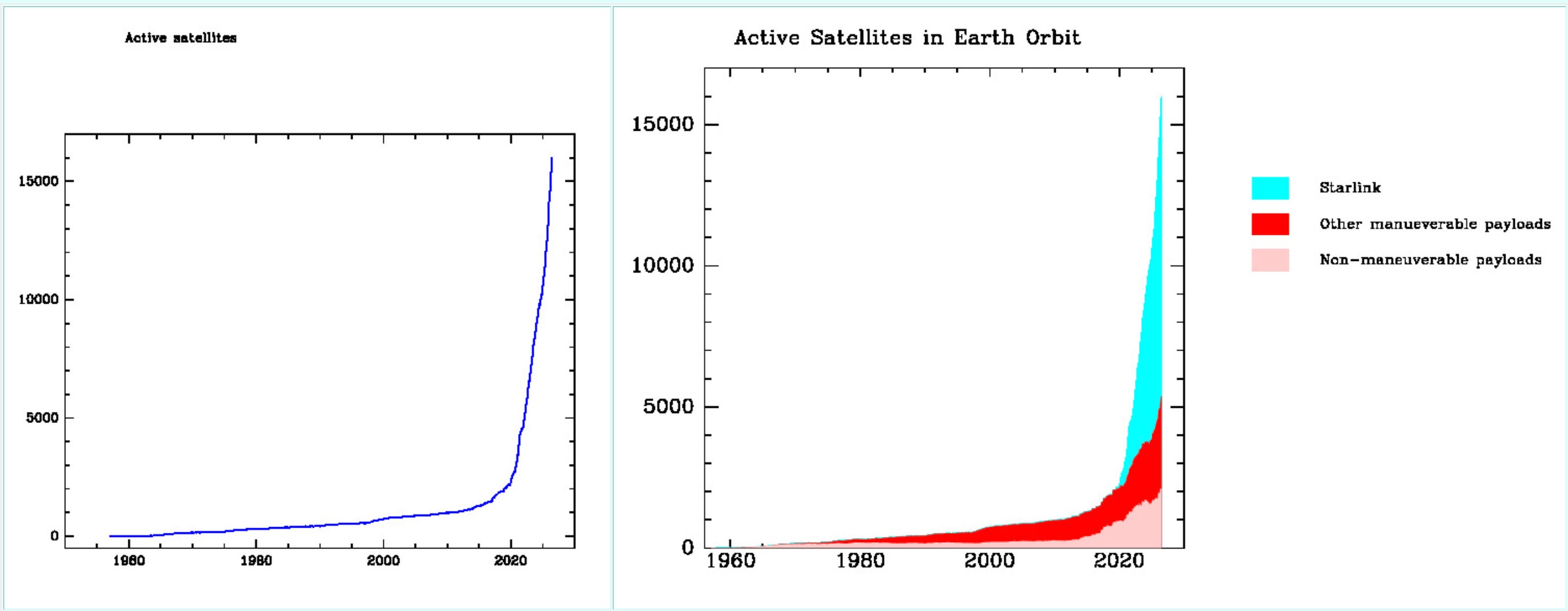
Then there’s Starlink. Building a global satellite internet network would have been prohibitively expensive under the old economics of spaceflight. SpaceX changed that. Today, Starlink operates thousands of satellites and provides internet access to remote regions, aircraft, ships, and disaster zones across the globe.
Opening up the space economy means opening up entirely new industries. AWS didn’t create Netflix, Airbnb, or Stripe. It made them easier to build. SpaceX could play a similar role in space.
Companies are already exploring space-based data centres, orbital manufacturing, lunar infrastructure, and asteroid mining. For instance, startups like Interlune are developing technologies to extract resources from the Moon, while companies such as AstroForge are building spacecraft designed to mine valuable metals from asteroids.
None of these businesses exist without affordable access to orbit. The rocket isn’t the product. It’s the enabling infrastructure. If even a handful of these industries succeed, they could create billions of dollars in value on top of the infrastructure that SpaceX is building.
Just as the internet economy emerged on top of cloud infrastructure, a future space economy will emerge on top of the transportation infrastructure that SpaceX is building. That’s what makes SpaceX so valuable.
And like every infrastructure business before it, the real opportunity emerges when economies of scale kicks in. The more rockets SpaceX launches, the cheaper launches become. The cheaper launches become, the more businesses can afford to go to space.
The biggest opportunities in space will come from the thousands of businesses that become possible once getting to orbit becomes cheap. SpaceX simply happens to be laying the roads.
If you liked this story on SpaceX, feel free to share this with your friends, family or even strangers.
nice write up mate. Hadn't considered things that way.